

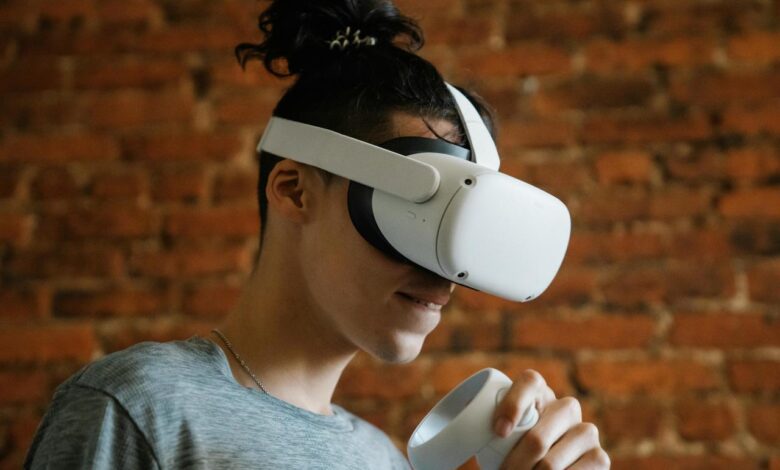
The landscape of modern entertainment is undergoing a massive transformation as we step further into the era of immersive digital experiences. Virtual Reality, once a dream found only in science fiction novels, has matured into a sophisticated technology that blurs the line between the physical and the digital. This evolution is driven by rapid advancements in optics, haptic feedback, and spatial computing, allowing users to transport themselves to entirely new dimensions from the comfort of their living rooms. Whether you are exploring the depths of a digital ocean or engaging in high-stakes tactical combat, the sense of “presence” is more convincing than ever before.
Today’s hardware is lighter, more powerful, and significantly more accessible to the general public than its predecessors. As developers push the boundaries of what is possible within these simulated environments, the hardware must keep pace to deliver fluid, realistic visuals. This guide aims to navigate the complex world of high-end VR, breaking down the essential components that make an experience truly cutting-edge. We will explore everything from the intricacies of display resolution to the psychological impact of full-body immersion. By the end of this journey, you will have a deep understanding of how to curate the ultimate setup for your digital adventures.
The Evolution of Visual Fidelity
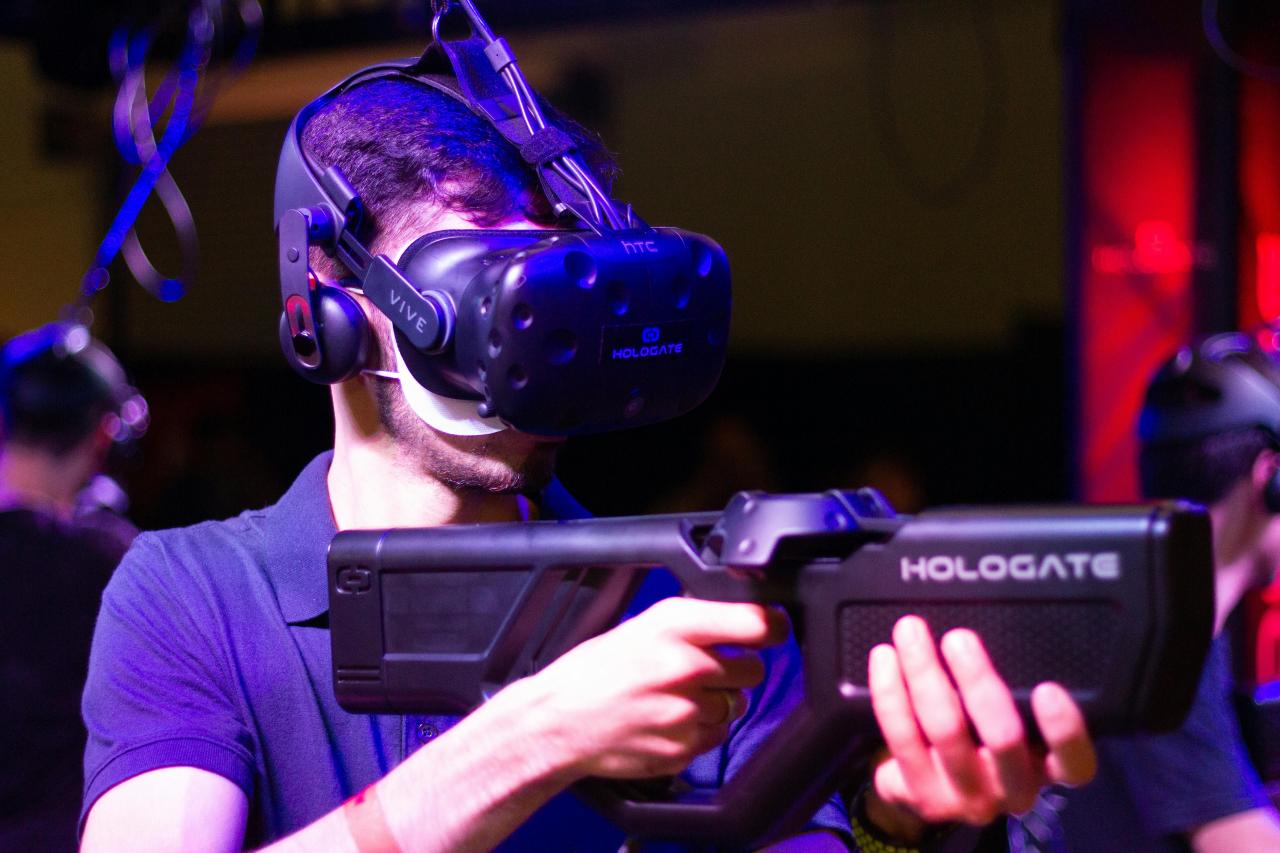
At the heart of any immersive experience is the quality of the visuals. If the image is blurry or jagged, the illusion of reality is immediately shattered for the user.
A. High-Resolution Display Panels
Modern headsets utilize advanced OLED or LCD panels that offer high pixel density. This helps eliminate the “screen door effect,” where users see the fine lines between pixels.
B. Refresh Rates and Motion Fluidity
A high refresh rate, measured in Hertz, is crucial for preventing motion sickness. Cutting-edge systems now push for 120Hz or even 144Hz to ensure that every movement feels instantaneous and natural.
C. Field of View Expansion
The field of view determines how much of the digital world you can see at once. Increasing this angle allows for better peripheral vision, making the environment feel vast rather than restrictive.
Mastering the Art of Tracking
For a digital world to feel real, it must respond to your physical movements with perfect accuracy. Tracking technology has moved from basic sensors to complex spatial mapping.
A. Inside-Out Tracking Systems
This technology uses cameras built directly into the headset to map the room around you. It eliminates the need for external base stations, making setup much faster and more flexible.
B. External Base Station Precision
For professional-grade accuracy, many enthusiasts still prefer laser-based tracking. These sensors provide sub-millimeter precision, ensuring your hands never “drift” during intense gameplay.
C. Eye Tracking and Foveated Rendering
Cutting-edge headsets now track where your eyes are looking. This allows the system to focus its processing power on the exact spot you are viewing, significantly improving performance.
The Rise of Standalone Hardware
One of the biggest hurdles for VR adoption was the need for a powerful, expensive computer. Standalone headsets have changed the game by putting the processor inside the goggles.
A. Mobile Chipset Advancements
The processors inside portable headsets are becoming incredibly efficient. They can now handle complex physics and detailed textures that were previously only possible on desktops.
B. Wireless Freedom and Mobility
Removing the cable allows for 360-degree movement without the risk of tripping. This freedom is essential for active games that require ducking, dodging, and turning.
C. Hybrid Connection Capabilities
Many standalone units can still connect to a PC via high-speed data cables or Wi-Fi. This gives users the best of both worlds: portability for travel and power for high-end titles.
Achieving Physical Presence through Haptics
Immersion is not just about what you see; it is about what you feel. Haptic feedback technology is evolving to simulate the sense of touch.
A. Advanced Controller Vibration
Modern controllers use linear actuators to create a variety of sensations. You can feel the difference between the click of a button and the recoil of a virtual tool.
B. Haptic Vests and Body Suits
For those who want total immersion, wearable suits provide feedback across the chest and arms. Feeling the vibration of an explosion or the pitter-patter of digital rain adds a new layer of depth.
C. Grip Force Simulation
Experimental controllers can now simulate the resistance of objects. When you pick up a virtual rock, the triggers become harder to pull, mimicking the weight of the item.
The Importance of Spatial Audio
Sound is a powerful tool for grounding a user in a virtual space. Spatial audio recreates how we hear sounds in the real world based on direction and distance.
A. Three-Dimensional Sound Positioning
If a digital bird chirps above your left shoulder, the audio engine ensures the sound hits your left ear slightly before your right. This helps you instinctively know where objects are located.
B. Object-Based Audio Engines
Rather than simple stereo tracks, sounds are treated as physical objects in a 3D space. This allows for realistic echoes and muffling when sounds pass through virtual walls.
C. Integrated Headphone Solutions
Most high-end headsets now feature off-ear speakers. These provide high-fidelity sound while allowing you to maintain some awareness of your actual physical surroundings.
Exploring the Variety of Digital Content
The hardware is only as good as the experiences it can run. The diversity of VR content has expanded far beyond simple tech demos.
A. Narrative-Driven Adventure Titles
Full-length games with complex stories are becoming the standard. These titles use VR to place you in the center of the drama, making you a participant rather than an observer.
B. Social VR and Collaborative Spaces
Virtual meeting rooms and social hubs allow people to hang out regardless of physical distance. These platforms are becoming the new frontier for digital socialization and community building.
C. Educational and Professional Simulations
VR is being used to train pilots, surgeons, and engineers. Simulations allow professionals to practice high-stakes tasks in a safe, repeatable, and low-cost environment.
Managing Comfort and Ergonomics
Spending long periods in a virtual world requires a headset that is comfortable to wear. Ergonomics is a major focus for hardware designers.
A. Weight Distribution and Balance
A front-heavy headset can cause neck strain over time. Modern designs move the battery or heavy components to the back of the head strap to balance the load.
B. Breathable Face Gaskets
Using VR can be a workout, leading to heat and sweat. High-quality facial interfaces use breathable fabrics and vents to keep your face cool and prevent lenses from fogging.
C. Adjustable IPD Settings
Interpupillary distance (IPD) is the measurement between your eyes. Having a physical slider to adjust the lenses ensures that every user gets a clear, sharp image without eye strain.
Overcoming Motion Sickness
For some, the disconnect between virtual movement and physical stillness causes discomfort. Developers and hardware makers have found ways to mitigate this.
A. Comfort Vignettes and Blinders
Software can automatically narrow your field of view when you move quickly in a game. This reduces the sensory conflict and helps users stay comfortable during fast action.
B. Teleportation vs. Smooth Locomotion
Giving users a choice in how they move is vital. Teleporting from spot to spot is much easier on the stomach than “sliding” across the digital floor.
C. Acquiring Your “VR Legs”
Most people find that their tolerance for VR increases with short, frequent sessions. Starting with stationary experiences before moving to intense flying games is highly recommended.
The Role of Hand Tracking
The future of VR interaction may not involve controllers at all. Hand tracking allows you to use your natural gestures to interact with the digital world.
A. Optical Hand Tracking Precision
Cameras on the headset can now recognize individual finger movements. This allows you to point, pinch, and grab objects just as you would in the real world.
B. Intuitive Menu Navigation
Navigating a digital interface becomes much simpler when you can just tap virtual buttons in the air. It makes the technology feel more like an extension of your body.
C. Accessibility and Ease of Use
Hand tracking is perfect for non-gamers who may find traditional controllers confusing. It lowers the barrier to entry for educational and social VR applications.
The Future of Mixed Reality (MR)
The line between Virtual Reality and Augmented Reality is starting to blur. Mixed Reality allows digital objects to interact with your real-world environment.
A. High-Resolution Color Passthrough
Cameras on the front of the headset show you a video feed of your room. You can then place digital monitors or games directly on your physical desk or walls.
B. Spatial Anchoring Technology
The system remembers where you placed digital objects in your home. When you put a virtual pet on your actual sofa, it will still be there when you return the next day.
C. Seamless Transition Between Realities
A single dial on the headset can allow you to fade between total immersion and the real world. This flexibility makes the hardware useful for both work and play.
Investing in the Right Accessories
To get the most out of a cutting-edge setup, a few key accessories can make a huge difference. These small additions improve performance and longevity.
A. Prescription Lens Inserts
If you wear glasses, fitting them inside a headset can be uncomfortable. Custom-made prescription lenses can be clipped over the VR optics for perfect clarity.
B. Battery Expansion Packs
Standalone headsets usually have a battery life of two to three hours. External battery straps can double or triple that time, allowing for longer sessions without a cord.
C. Protective Silicone Covers
Silicon covers for the controllers and headset protect against accidental bumps and scratches. They also make the equipment much easier to clean after a sweaty session.
The Psychological Impact of Immersion
VR has a unique ability to trick the brain into believing it is somewhere else. This phenomenon has profound implications for empathy and entertainment.
A. The Illusion of Scale
In VR, a mountain actually feels like a mountain. Seeing a massive dragon tower over you creates a sense of awe that a flat television screen simply cannot replicate.
B. Empathy Through Perspective Shifting
By putting you in the shoes of someone else, VR can change how you view the world. Experiences that depict historical events or social issues are becoming powerful educational tools.
C. The Concept of Digital Tourism
You can visit the Louvre or climb Mount Everest without leaving your home. VR allows people with physical limitations to explore the world in ways that were previously impossible.
Developing a VR-Ready Space
Your physical environment is just as important as your digital one. Setting up a safe play area ensures you don’t break your TV or stub your toe.
A. Defining Guardian Boundaries
Every modern VR system allows you to draw a virtual fence around your play area. If you get too close to a wall, a grid appears to warn you.
B. The Benefits of a Swivel Chair
If you have limited space, playing while seated in a swivel chair is a great compromise. It allows for 360-degree rotation without needing a large open floor.
C. Managing Cable Tangles
If you use a wired setup, overhead cable management systems keep the cord off the floor. This prevents the cord from wrapping around your legs during intense movement.
The Social Frontier of Virtual Reality
VR is transforming from a solitary activity into a thriving social ecosystem. Connecting with others in 3D space feels much more personal than a video call.
A. Customizable Avatars and Expression
In social VR, your avatar is your identity. Advanced systems can even track your facial expressions and map them onto your character for more realistic conversations.
B. Virtual Concerts and Large-Scale Events
Thousands of people can attend a concert simultaneously in a shared digital space. These events feature interactive elements that go far beyond a standard live stream.
C. Cooperative Problem Solving
Escape rooms and puzzle games in VR require team coordination. Working with friends to solve a task while standing “together” in a room is incredibly rewarding.
Maintenance and Long-Term Care
High-end electronics require proper care to maintain their performance. A few simple habits will keep your headset in top shape for years.
A. Sunlight Protection for Lenses
Direct sunlight can act like a magnifying glass and burn the internal display. Never leave your headset near a window where sun can hit the lenses.
B. Cleaning with Microfiber Cloths
The lenses are delicate and can be easily scratched by paper towels. Only use clean, dry microfiber cloths to wipe away smudges and fingerprints.
C. Firmware and Software Updates
Manufacturers frequently release updates that improve tracking and battery life. Keeping your software current ensures you have the latest features and security patches.
The Intersection of VR and Productivity
VR is not just for games; it is becoming a legitimate tool for work. The idea of a “virtual office” is gaining traction among remote workers.
A. Infinite Virtual Monitors
Instead of buying three physical screens, you can have a dozen virtual ones. You can resize them and float them around your workspace to maximize your productivity.
B. Distraction-Free Work Environments
VR allows you to block out your messy room and sit in a peaceful, digital library. This level of focus is perfect for writers, coders, and designers.
C. Remote Collaborative Design
Architects and car designers can walk through 3D models of their projects together. Making changes in real-time while standing inside a building that hasn’t been built yet is a massive advantage.
Conclusion
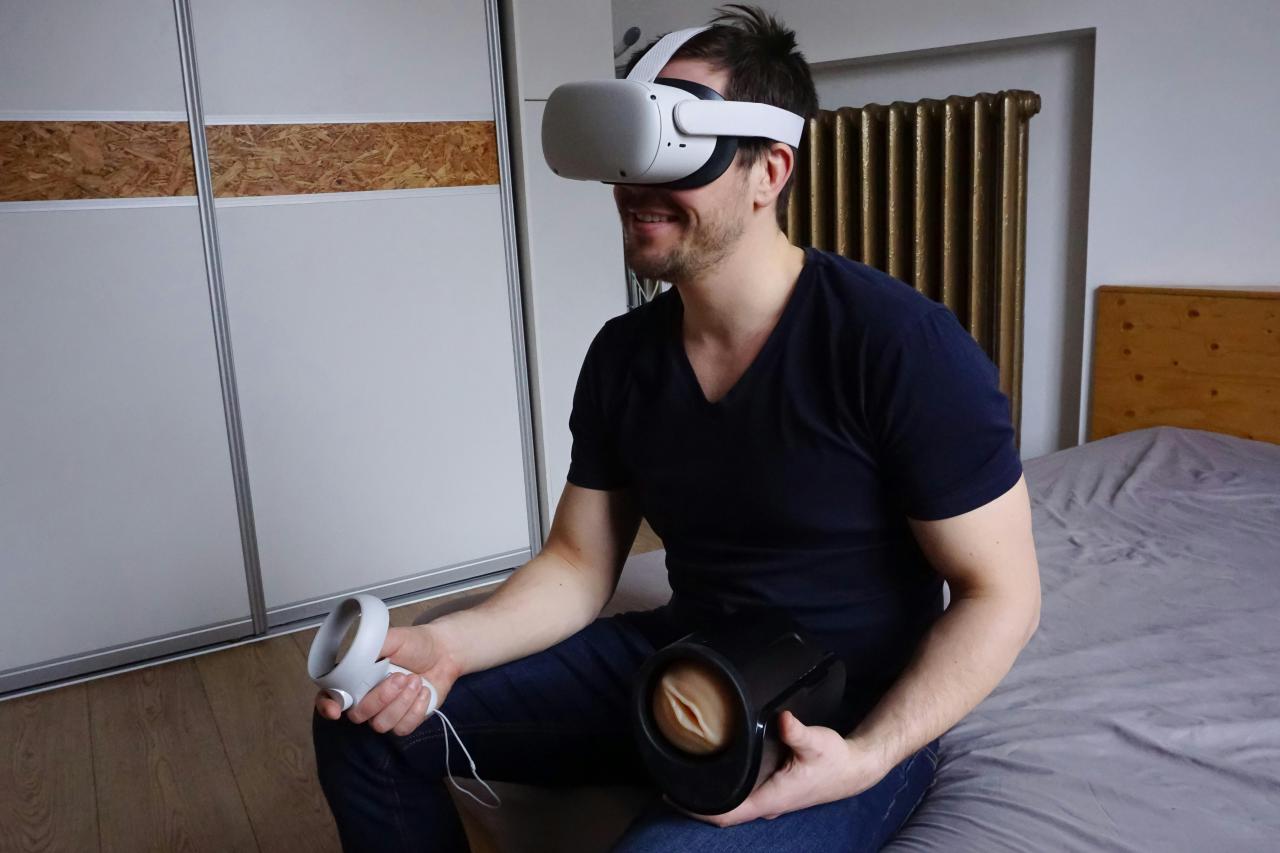
Virtual reality has officially moved beyond the stage of a simple gimmick. The technology now offers a level of immersion that was previously unimaginable. Visuals are becoming sharper and refresh rates are smoother for every user. Hardware is finally light enough to be worn for extended periods of time. Tracking systems have eliminated the need for complex and messy wires. Haptic feedback is adding a sense of touch to our digital interactions. Spatial audio ensures that our ears are as convinced as our eyes are.
The library of available content is growing more diverse every single day. Social experiences are making the world feel like a much smaller place. Education and training are being revolutionized by these simulated environments. Comfort and ergonomics have become a top priority for all major manufacturers. Mixed reality is beginning to bridge the gap between our two worlds. Proper maintenance will ensure that your expensive hardware lasts for years. A dedicated play space is essential for staying safe while fully immersed. The future of the medium looks brighter than it has ever looked before. Now is the perfect time to explore everything this technology has to offer.